
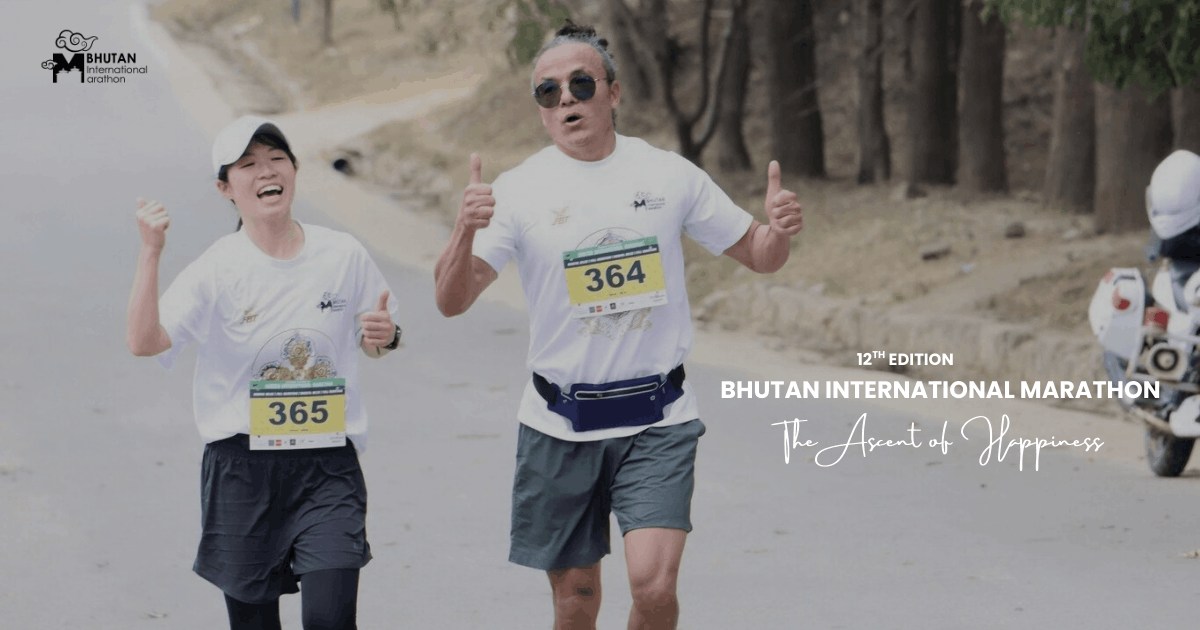
The finish line of the Bhutan International Marathon in the valley of Punakha is always filled with emotion. Every year runners from different parts of the world arrive here carrying their own stories, expectations, and quiet hopes about what the race might mean to them. Some come chasing a personal best, others come simply for the experience of running in the heart of Bhutan. Yet by the time they reach the finish line, most realize that the journey has become something far more personal than they expected.
That morning the valley looked calm and beautiful in the way Punakha always does. The cool mountain air carried the sound of cheering runners and conversations in different languages. The river flowed steadily beside the course, while the mountains stood quietly in the distance, almost like silent observers watching every runner arrive.
As part of the organizing team, I spent most of the morning moving around the finish area with a camera in my hand, trying to capture those fleeting moments that disappear almost as quickly as they happen. Some runners crossed the line with raised arms and wide smiles, others dropped onto the grass in relief after the long effort, while a few simply stood still for a moment, breathing deeply and looking around the valley as if trying to take everything in.
Between photographs, I was also recording short interviews with runners who had just completed their race. Many spoke about the beauty of Bhutan and the uniqueness of the course. A few struggled to find the right words, still overwhelmed by the experience of finishing.
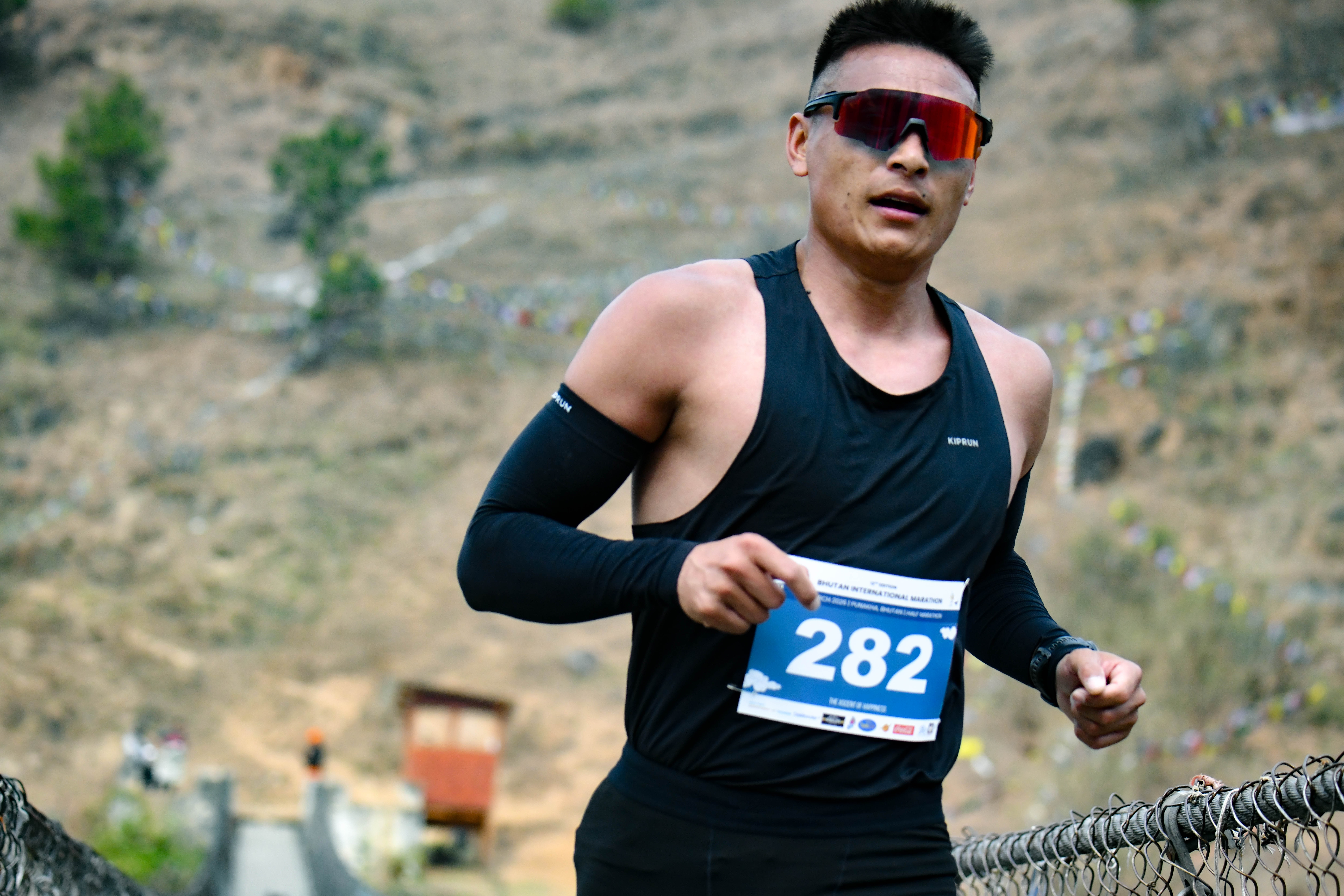
During one of those moments, while I was busy documenting the reactions of runners at the finish line, a man slowly walked toward me. His steps were steady but heavy with fatigue, and although his face showed the clear exhaustion of the race, there was something thoughtful in his expression that made me pause.
When he came closer, he spoke quietly.
“This shoe is very special to me,” he said.
His name was Jigme Tenzin, a runner many people in the community affectionately know as the Mountain Man. Jigme is deeply connected with the mountains of Bhutan and is well known among local runners for his endurance and love of difficult terrain. Yet that morning he was not speaking about records or achievements.
Instead, he gently lifted his foot and showed me his running shoe. On the side of it, written carefully with a marker, was his finishing time for the half marathon — 1:27:37 — along with the date of the race.
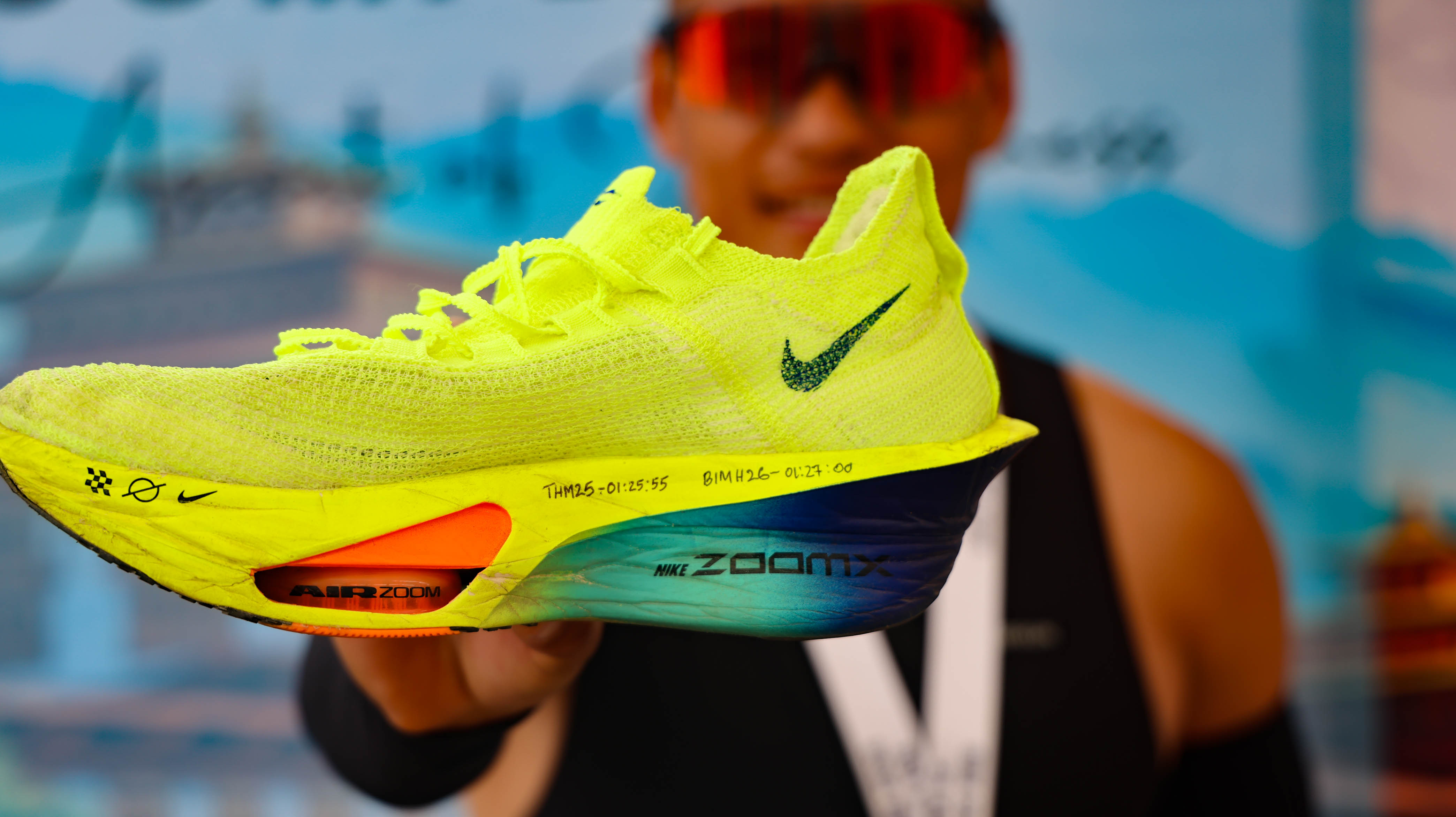
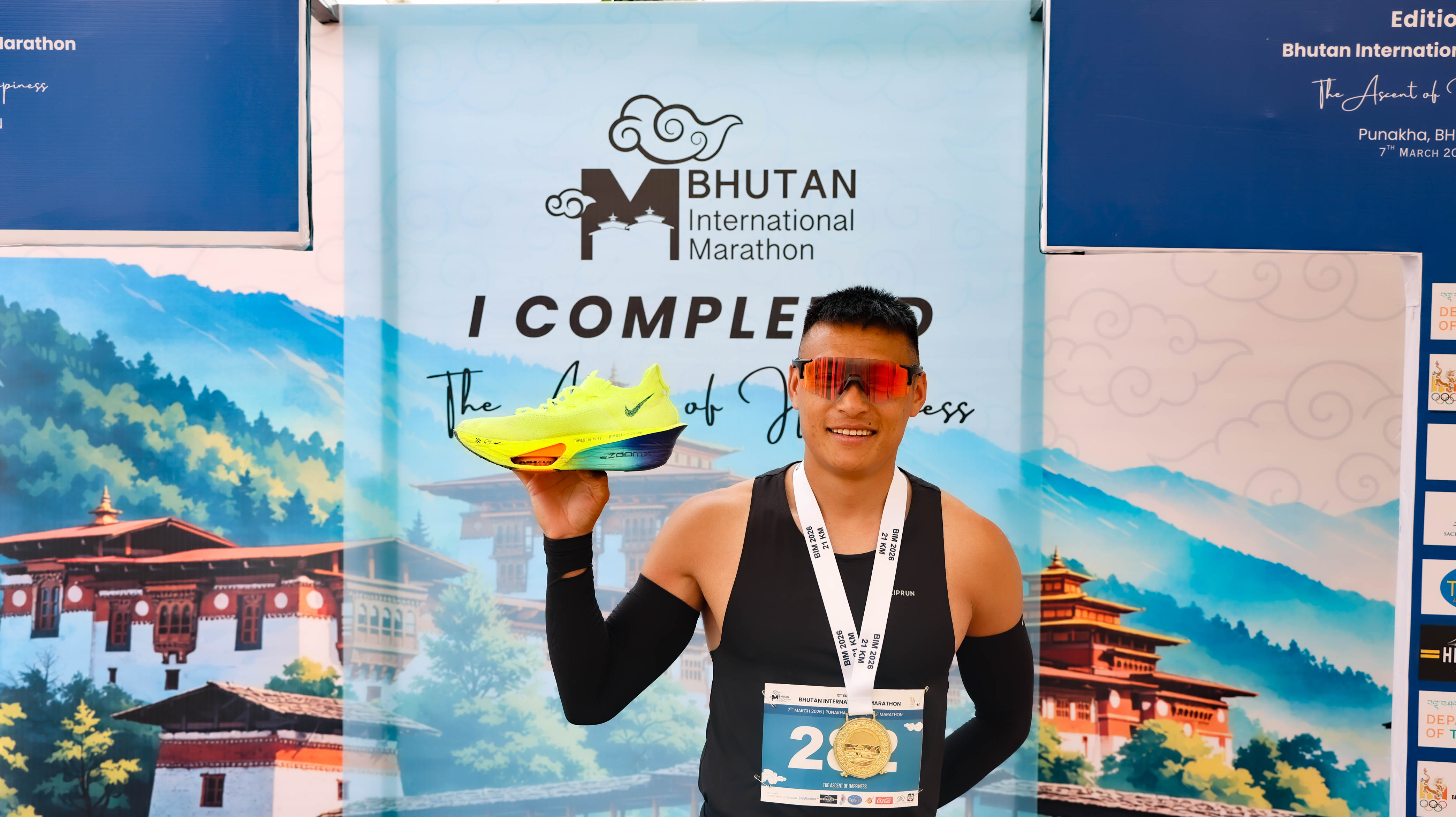
He smiled quietly as he explained why he had written it there. This pair of shoes, he said, would never be thrown away. He planned to keep it in his showcase so that many years from now he could look at it again and remember this exact day. After a short pause, he looked out toward the valley of Punakha and added that whenever he drives back here in the future, he hopes he will still be able to breathe the same air and recall how it felt to run through this place.
The meaning of the race becomes clearer when you listen to stories like his. For many runners the Bhutan International Marathon gradually turns into something more than a competition. The experience stays with them long after the finish line disappears.
The route itself has a lot to do with that feeling. The course winds through villages where children wave enthusiastically at passing runners, crosses suspension bridges that sway gently above the river, and follows quiet roads that move through fields and forests with the mountains always present in the background. Running here often feels less like a race and more like a journey through a landscape that invites reflection.
This idea is captured in the marathon’s theme, “The Ascent of Happiness.” For many participants the ascent is not only about climbing the hills of the course, but also about the emotional experience that unfolds along the way.
Later that morning, while I continued moving around the finish area capturing photographs and interviews, Jigme came back again. This time he approached with an even bigger smile. Before I could say anything, he stepped forward and gave me a warm hug while holding the race medal in his hand.
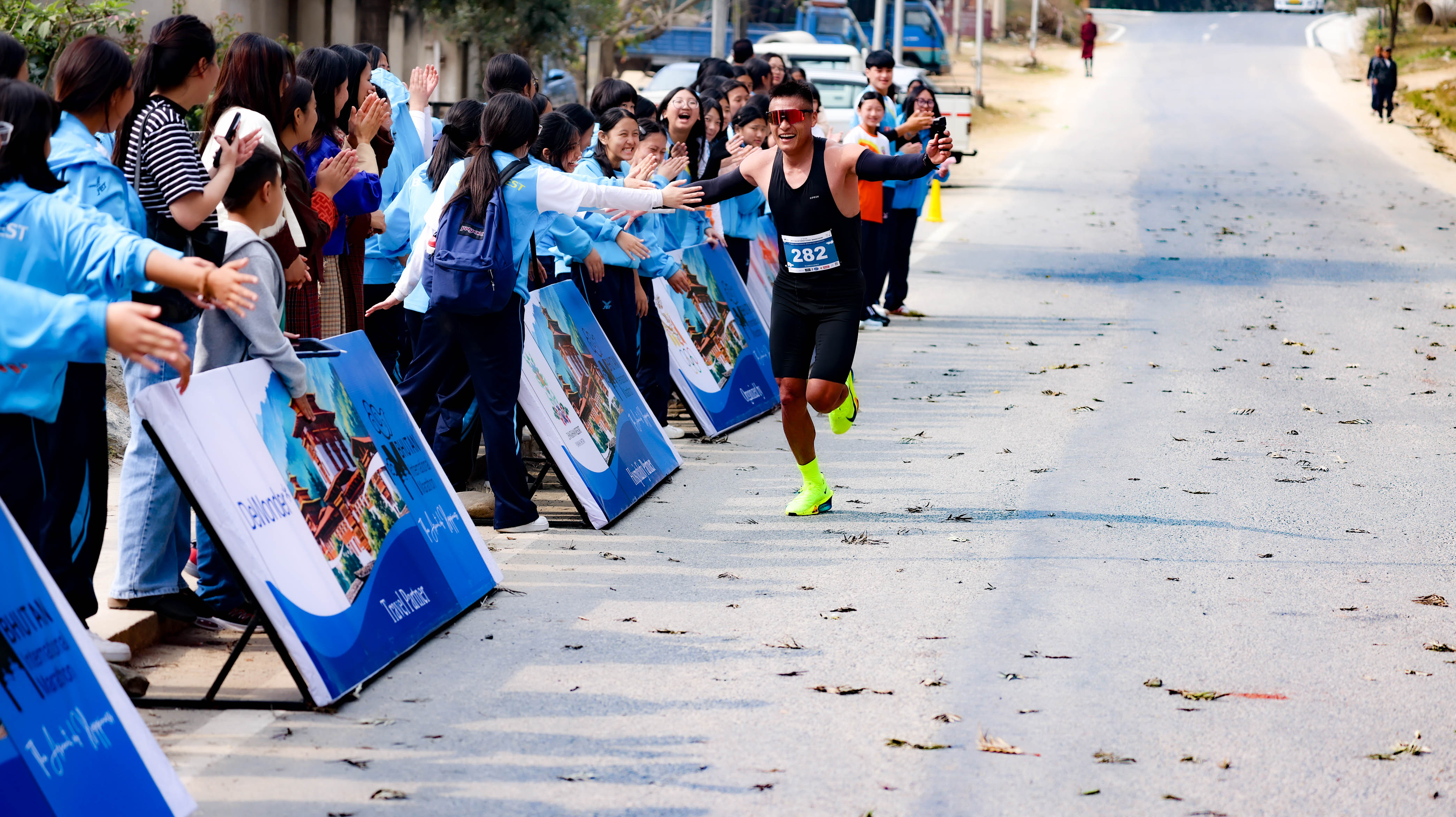
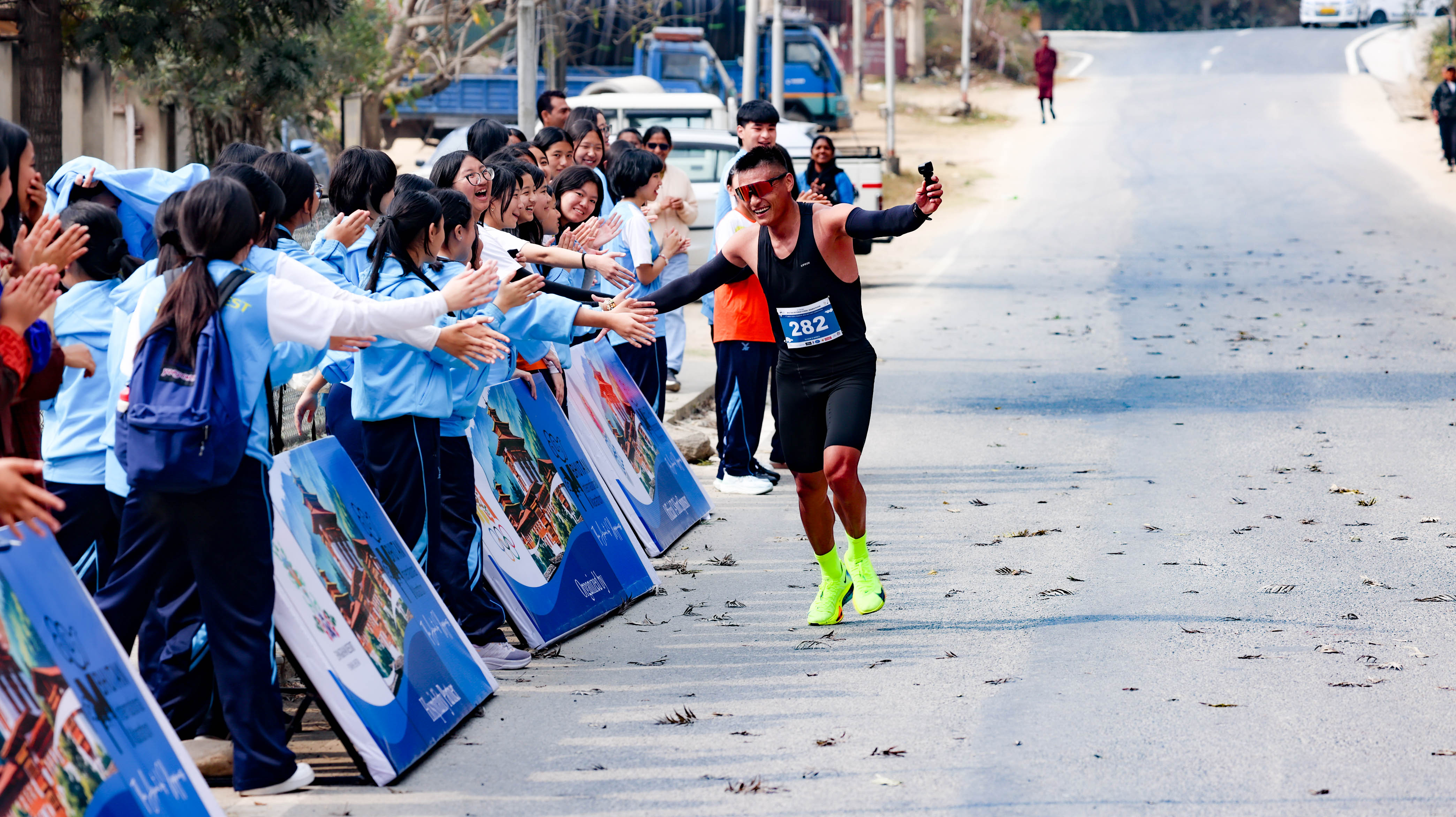
“Hi Victor Dai,” he said with genuine excitement, “the medal you designed is just stunning. I have run in many events, but this medal makes me crazy. I will treasure it forever.”
He kept turning the medal slowly in his hands, studying its details with clear admiration. In that moment it was obvious that the medal meant far more to him than simply proof of finishing the race. It carried the memory of the run itself — the effort, the valley, and the feeling of being part of something that clearly meant a great deal to him.
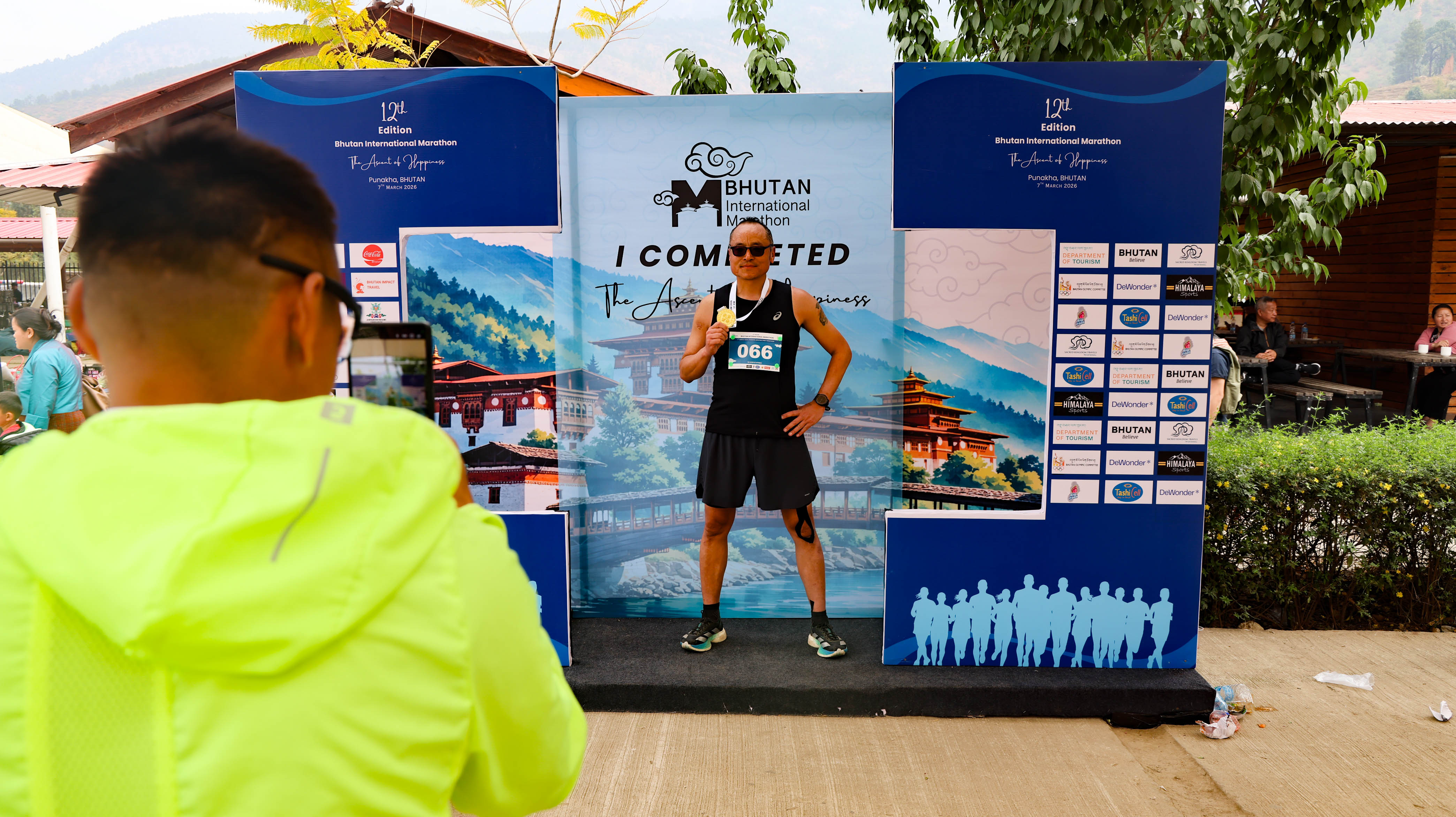
Later, while reviewing photographs from the finish area, I noticed another image of Jigme. In this one he was not standing proudly with his medal, nor was he posing for a photograph.
Instead, he was standing behind the camera, helping his friends capture their own memories of the race.
He seemed perfectly comfortable there, quietly sharing the moment rather than being the focus of it.
That quiet humility explains why people call him the Mountain Man. Mountains carry immense strength, yet they stand quietly without demanding attention, shaping the landscape around them simply by being there. Jigme carries much of that same character.
The Bhutan International Marathon continues to attract runners from around the world, and experiences like this explain why. A marathon can be organized in many places, with measured distances, timing systems, and medals waiting at the finish line.
What runners find in Bhutan, however, is something far less easy to replicate. The valleys, the rivers, the mountains, and the people along the course create an atmosphere that turns a race into a memory.
Sometimes that memory is preserved in a pair of running shoes with a finishing time written on the side. Sometimes it is reflected in the excitement of a runner admiring a medal. And sometimes it appears quietly in a photograph where the Mountain Man of Bhutan stands behind the camera, helping others remember their own moments of happiness.
Victor Gurung
Chief of Media, Digital Innovation & Technical Solutions
Bhutan Olympic Committee
Registration
We’re excited to announce that the 12th Edition of the Bhutan International Marathon will take place on 7th March 2026!
Registration is now open—with very limited spots available. Secure your place early and be part of one of Bhutan’s most inspiring running events.
