

Count What Matters, Miles That Matter
13th Bhutan International Marathon 2027
Why the Bhutan International Marathon Is Redefining the Meaning of Running
In an era where running has become increasingly measured by pace charts, GPS watches, personal bests, and social media milestones, it is easy to forget why people began running in the first place. The modern marathon often celebrates speed, distance, and statistics, reducing one of humanity’s oldest forms of movement into numbers displayed on a screen. But not every marathon asks the same question.
Some ask, How fast can you finish?
The Bhutan International Marathon 2027 asks something far more profound: What truly matters when you run?
Under the official theme, “Count What Matters, Miles That Matter,” the marathon invites participants to rethink success not as a number on a stopwatch but as a collection of meaningful moments experienced along the way. It is an invitation to measure a race not only by kilometres covered but also by connections formed, communities strengthened, landscapes respected, and memories that remain long after the finish line has disappeared. For Bhutan, this is not a departure from tradition. It is a continuation of a philosophy that has always defined the nation’s approach to life.
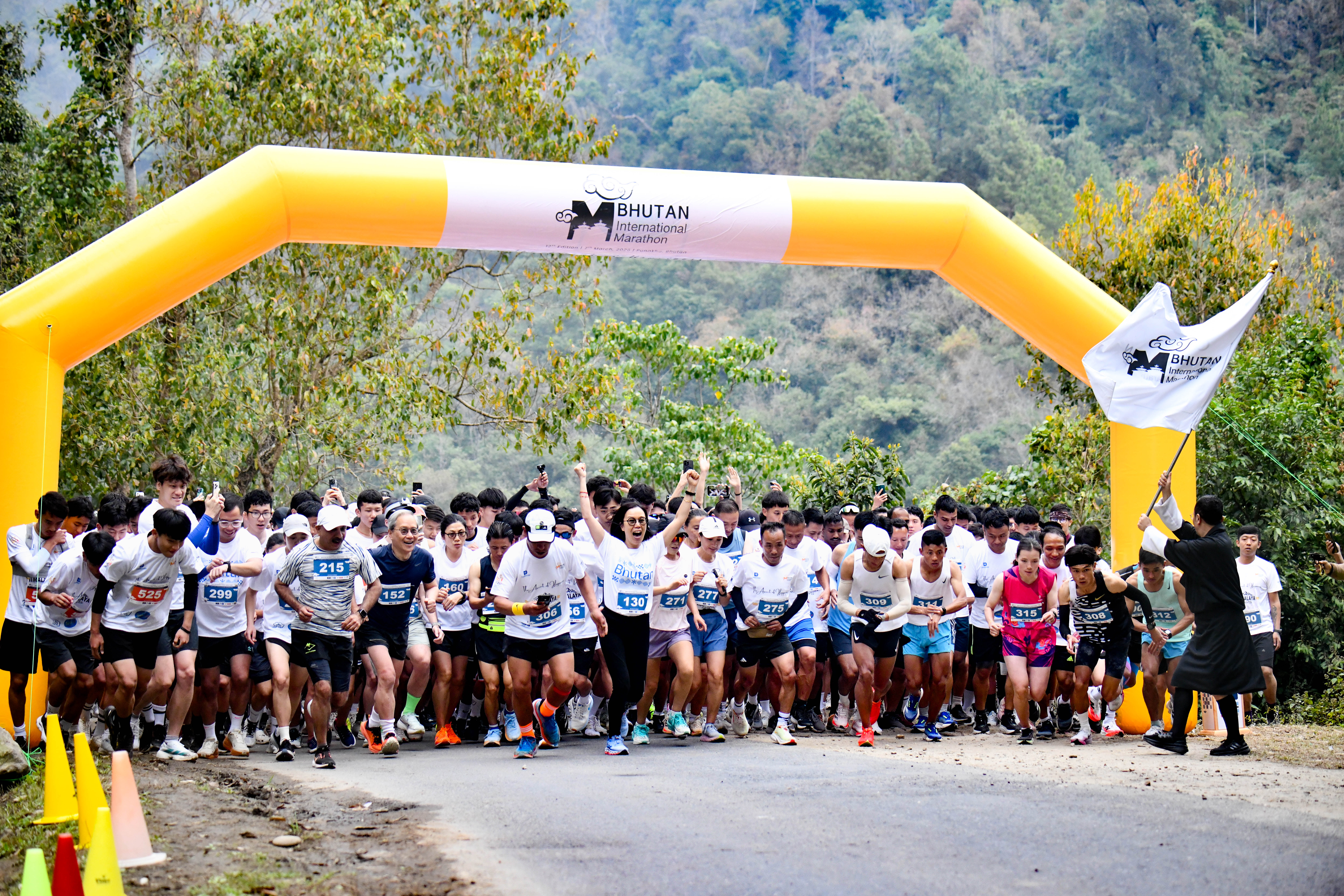

The Bhutan International Marathon has never been simply another race on the global running calendar. Since its inception, it has reflected values deeply rooted in the country’s identity, mindfulness, well-being, cultural authenticity, and the belief that experiences hold greater value than possessions or accolades. Previous editions have celebrated happiness and the ascent towards personal fulfilment. Each year, the marathon has offered runners an opportunity to discover Bhutan not as tourists passing through, but as participants sharing a journey with its people and landscapes. The 2027 edition builds naturally upon that legacy. Rather than introducing another slogan, “Count What Matters, Miles That Matter” becomes the philosophy that shapes every aspect of the marathon experience, from the first registration to the final step across the finish line. It is a reminder that meaningful journeys are rarely defined by speed.
Nowhere is that philosophy more fitting than Punakha, one of Bhutan’s most treasured valleys. Cradled between mountains and nourished by the Pho Chhu and Mo Chhu rivers, Punakha offers more than spectacular scenery. It embodies a slower rhythm of life, one where agriculture follows the seasons, traditions remain woven into everyday living, and communities continue to value relationships above urgency. For runners arriving from cities where every minute is accounted for, Punakha offers something increasingly rare, permission to slow down. The marathon route becomes more than a course to conquer. It becomes a moving conversation with the landscape.
Each bend reveals centuries-old villages where children gather to cheer unfamiliar faces. Prayer flags flutter gently across mountain ridges, carrying hopes and blessings on the wind. Farmers pause from their fields to wave encouragement. Ancient monasteries overlook winding roads that have witnessed generations before the first marathon runner ever arrived. These are not distractions from the race. They are the race. Every stride becomes an opportunity to notice what often escapes attention in faster places, the sound of rivers flowing beneath traditional bridges, the fragrance of pine forests after morning mist, the warmth of a volunteer offering water with genuine hospitality, or the quiet smile exchanged between runners who understand that every marathon is ultimately a personal conversation with oneself. These are the miles that matter.
Around the world, marathons often promise greener events through ambitious commitments and technical language. While these efforts are important, the Bhutan International Marathon proposes something refreshingly different. Instead of speaking about sustainability, it seeks to allow participants to experience it. The philosophy begins with small, honest actions. A reusable bottle carried throughout the course instead of countless disposable alternatives. Local produce served to nourish runners while supporting nearby farmers. Volunteers who understand they are not simply assisting an event but representing the spirit of their communities. Waste is thoughtfully managed not because it satisfies a policy but because respect for the environment has long been part of everyday Bhutanese life. Visitors leaving with greater appreciation for local customs rather than simply photographs.
These actions may appear modest when viewed individually. Collectively, they become the true legacy of the marathon. Because meaningful change is rarely created through grand gestures alone. It is built through countless decisions that, together, reflect shared values. That is precisely what “Count What Matters” seeks to celebrate.
The philosophy extends beyond environmental responsibility into human connection. Every marathon depends upon people whose names never appear on podiums. Volunteers arriving before sunrise. Medical teams standing ready throughout the day. Community members preparing refreshments. Officials ensuring every runner remains safe. Local families opening their towns and traditions to visitors from around the world. Their contributions cannot always be measured in kilometres or seconds. Yet without them, there is no marathon. The 2027 edition acknowledges these invisible miles, the emotional effort, generosity, patience, and hospitality that make every participant’s journey possible. In doing so, the Bhutan International Marathon becomes not merely a sporting event but a shared community achievement.
For elite athletes, the race remains a test of endurance and discipline. Every ascent demands physical resilience. Every descent requires concentration. Every kilometre rewards months of dedicated preparation. Yet even for the fastest competitors, Bhutan gently shifts the definition of victory. Winning still matters. Performance still matters. Preparation still matters. But they are joined by something equally valuable: that is the presence. The ability to remain fully engaged with the journey unfolding beneath every step.
For recreational runners and mindful travellers, the marathon offers something even more uncommon. It provides permission to resist comparison. No leaderboard can measure the courage of someone completing their first marathon. No timing chip records the conversation shared between international runners and local schoolchildren. No finishing certificate captures the feeling of standing in Punakha at sunrise, recognising that this experience could never be replicated elsewhere. Some achievements exist beyond numbers. They deserve to be counted too.
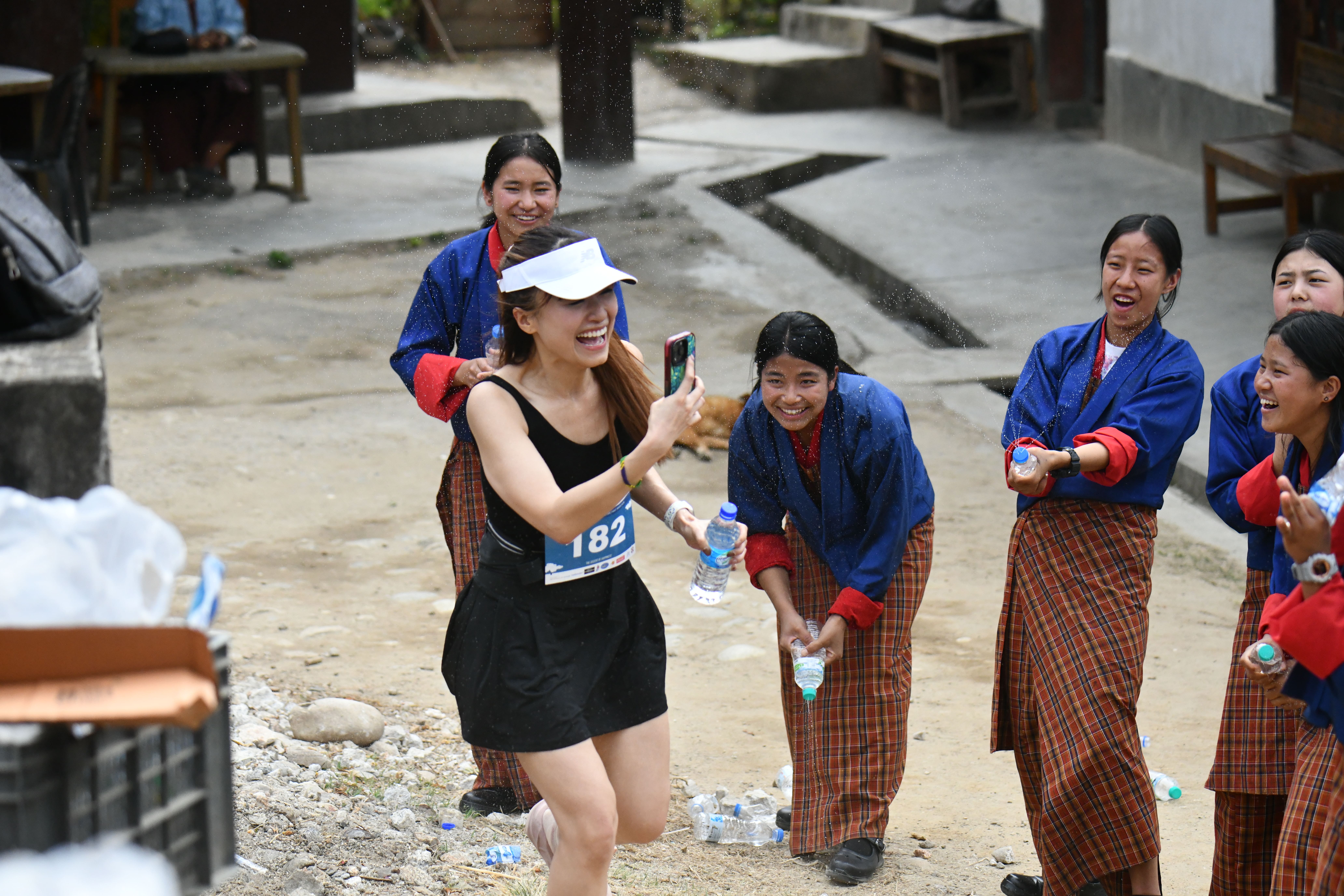
Perhaps that is why Bhutan remains such an extraordinary setting for a marathon. The country has long pursued development through principles that place human wellbeing alongside economic progress. The Bhutan International Marathon reflects that same philosophy on a deeply personal scale. Rather than asking participants to chase more, it quietly encourages them to notice more. More gratitude. More awareness. More respect. More connection. More purpose.
By the time runners cross the finish line, the official clock will display hours, minutes, and seconds. Those figures will enter race records. Personal bests will be celebrated. Champions will stand on podiums. Yet the true success of the Bhutan International Marathon will be measured elsewhere. It will be found in the volunteer who inspired a visitor with a simple act of kindness. In the local community that welcomed strangers as friends. In the runner who discovered that slowing down allowed them to experience more than speeding up ever could. In the shared understanding that sport possesses the remarkable ability to unite people across cultures, languages, and generations. Those are achievements that cannot be timed. They can only be remembered.
And perhaps that is the greatest message behind “Count What Matters, Miles That Matter”. Because when the medals have been awarded, the race bibs stored away, and the running shoes returned to their shelves, very few people will remember every split time. They will remember how Bhutan made them feel. They will remember the people they met, the mountains they crossed, the kindness they encountered, and the quiet moments that reminded them why they started running in the first place.
In the end, every marathon covers the same measurable distance. But not every marathon measures what truly matters. The Bhutan International Marathon does. And that may be the most meaningful mile of all.
